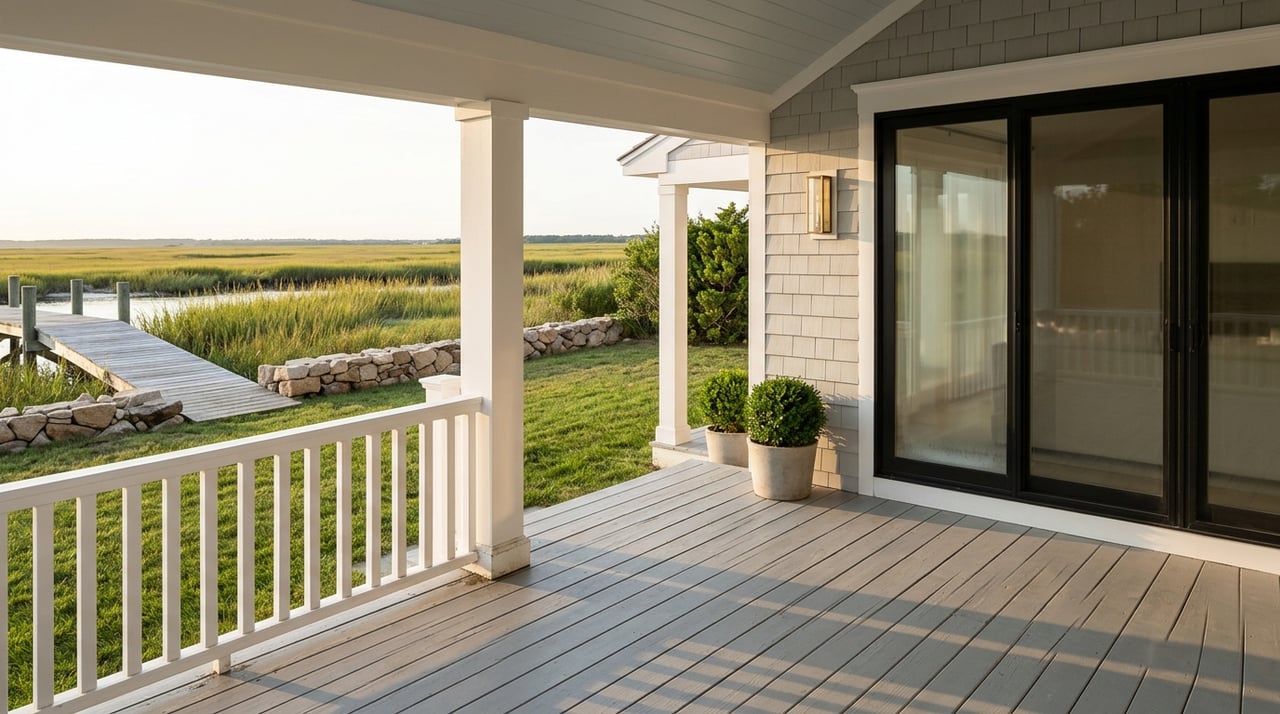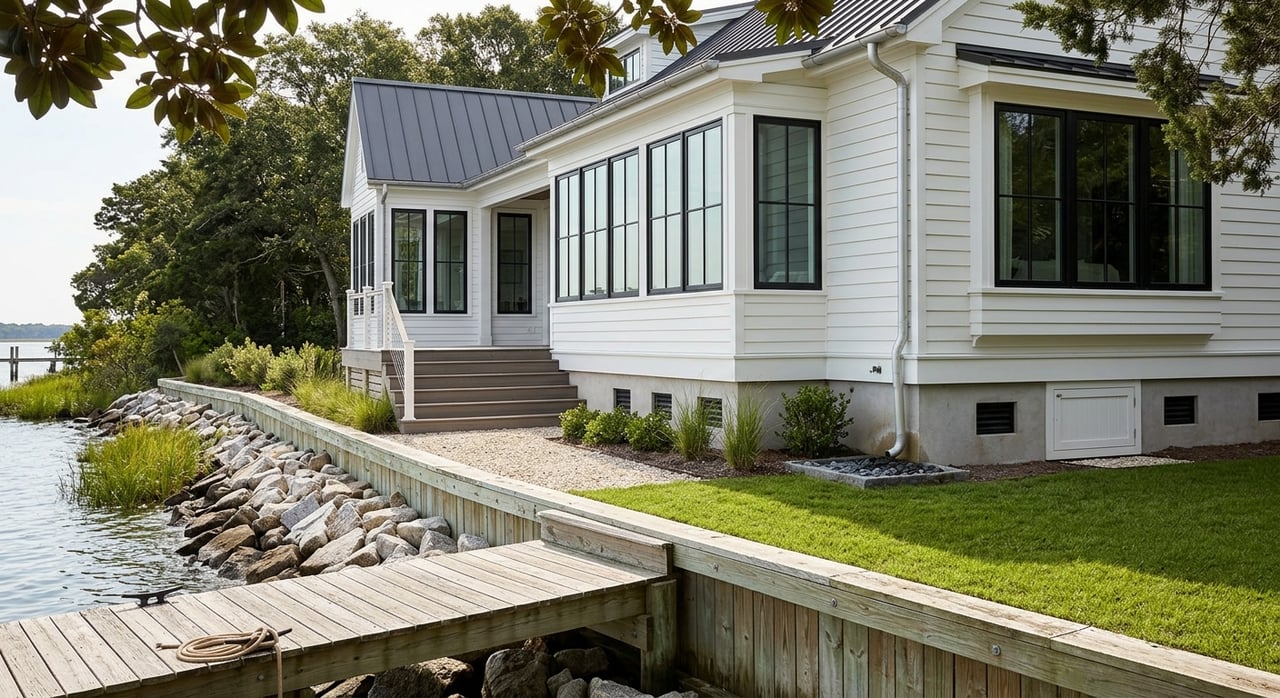
Buying waterfront property in Urbanna can feel like a dream come true, but it also comes with details you do not want to uncover after closing. Flood zones, dock permits, septic capacity, and shoreline rules can all affect how you use the property and what it costs to own. If you are considering a waterfront home in this part of Middlesex County, a clear due diligence plan can help you move forward with confidence. Let’s dive in.
Start With Flood Risk
For waterfront buyers in Urbanna, flood review should be one of the first steps, not one of the last. The official place to check flood-hazard information is FEMA’s Flood Map Service Center, which lets you search a property by address and confirm the current flood zone.
FEMA identifies Special Flood Hazard Areas as higher-risk zones with a 1% annual chance of flooding. In practical terms, Zone AE means base flood elevations are provided, while Zone V or VE points to a coastal high-hazard area with added wave action and erosion risk. Those details matter for financing, insurance, and future improvements.
Middlesex County’s Floodplain Ordinance ties local development review to FEMA mapping. The county’s Director of Planning & Community Development serves as floodplain administrator, and Urbanna’s zoning administrator also helps administer the ordinance with county support.
Flood Documents To Request
Before contingencies expire, ask for every flood-related record the seller can provide. A complete file can help you understand both risk and compliance.
- Elevation certificate
- Prior floodplain permits
- Letter of Map Amendment
- Letter of Map Revision
- Any other map-change documentation
It is also smart to compare the home’s finished-floor elevation to the base flood elevation. FEMA explains that an elevation certificate can be a key document for rating and compliance questions.
Get Flood Insurance Quotes Early
One of the most common mistakes buyers make is assuming homeowners insurance covers flood damage. FEMA makes clear that flood insurance is a separate policy, and lender-backed financing may require it for homes in Special Flood Hazard Areas.
That is why insurance quotes should happen early in your timeline. If the property is in a higher-risk flood zone, the premium may affect your monthly budget just as much as taxes or loan terms.
Build An Insurance Checklist
As you review the property, keep these items in one folder before your due diligence deadlines end:
- Flood insurance quote
- Homeowners insurance quote
- Any lender flood-insurance requirement
- Deductible review
- Contents coverage options
- Confirmation that the insurer understands the property’s shoreline or dock exposure
Middlesex County’s floodplain ordinance also notes that flood insurance may be withheld from structures built in violation of the ordinance. That makes permit history and compliance review especially important before closing.
Review Docks And Shoreline Structures
A pier or dock can be one of the biggest reasons you choose a waterfront property, but you should verify that what is there is properly documented. Under Virginia law, waterfront owners may have the right to build a private wharf, pier, or landing for noncommercial use, as long as navigation is not obstructed and other private rights are not harmed.
That said, legal waterfront rights are only the starting point. Local, state, and federal approvals may still apply, so you do not want to assume an existing structure is automatically compliant.
Middlesex County’s zoning ordinance adds important rules for marine-use structures such as seawalls, bulkheads, groins, and jetties. The ordinance says certain structures near the mean low-water line and side lot lines require Army Corps and or VMRC approval.
Urbanna’s town code also states that areas under water are part of a zoning district and governed by that district’s regulations. In other words, the waterward edge of the parcel matters, not just the upland portion of the lot.
What To Confirm About A Dock
If a property has a dock, pier, wharf, boat slip, bulkhead, or shoreline stabilization work, ask for:
- Prior permits and approvals
- Site plans or surveys showing dimensions and location
- Any records of repairs, expansions, or replacements
- Documentation tied to shoreline improvements
If boundaries, riparian access, or structure limits are unclear, bring in a surveyor or shoreline professional. The VIMS shoreline handbook explains that permit plans often need to identify mean high water, mean low water, wetlands, property lines, adjacent owners, and cross sections.
Understand Permit Routing
Permit procedures can change, so it helps to verify the current process before planning improvements. According to the U.S. Army Corps of Engineers, as of September 2, 2025, USACE became the central clearinghouse for joint permit applications that require review by VMRC, DEQ, and USACE.
For buyers, the takeaway is simple: if you are considering changes to a dock, bulkhead, shoreline, or other waterfront feature, ask early which agencies may need to review your plans. That can save time, money, and frustration later.
Check Septic, Well, And Utility Capacity
Many waterfront and rural properties around Urbanna are not served by public sewer or public water. If that is the case, system records become a major part of your due diligence.
Virginia’s onsite application package says an owner must obtain permits for a private sewage disposal system and private well before the county issues a building permit. If a home already has a septic system, the owner must obtain certification that the system is adequate for the proposed construction or get a permit for upgrades.
The Virginia Department of Health also explains that onsite sewage and private well applications generally require supporting work from a licensed evaluator or engineer unless VDH services are specifically approved. Certification letters transfer with ownership and do not expire, while construction permits are valid for 18 months.
Septic Records To Ask For
For an existing onsite system, VDH recommends reviewing:
- Operation permit
- As-built drawing
- Operator manual
- Maintenance reports
- Conditional permits
- Waivers
- Easements
- Notices of recordation
VDH’s guide on buying a house with an onsite system notes that operation permits list permitted capacity and that some repair waivers do not transfer to a new owner. Lenders may also ask for an inspection, even if VDH does not require one at transfer.
Ask About Bay Preservation Rules
If the parcel falls within the Chesapeake Bay Preservation Area, maintenance expectations may be stricter. VDH notes that conventional onsite systems in those areas should be pumped out every three to five years, and pump-outs are required there.
This is also a good time to confirm property lines. VDH advises applicants to mark lines carefully and contact a surveyor if boundaries are unclear.
Organize Your Closing File
When you buy waterfront property, a neat closing file is more than paperwork. It is your roadmap for ownership, insurance, maintenance, and future improvements.
Before removing contingencies, try to gather the following in one place:
- FEMA map information
- Elevation certificate
- Flood insurance quote
- Homeowners insurance quote
- Permit history for docks or shoreline work
- Septic and well records
- Any waivers, easements, or notices of recordation
This kind of organization can help you spot missing documents while there is still time to ask questions. It can also make life easier if you refinance, renovate, or sell later.
Know When To Bring In Specialists
Waterfront due diligence works best when the right people are involved at the right time. Based on local permit and record-keeping requirements, a practical order is to start with zoning or floodplain questions, then move to survey review, then septic or well evaluation, and then legal guidance if a boundary or structure dispute exists.
For public-office questions, current contacts include the Urbanna Town Administrator and Zoning Administrator at 804-758-2613, Middlesex County Planning and Zoning at 804-758-3382, and the Middlesex County Building Official office at 804-758-4305, as listed on the Town of Urbanna administration page and county resources. For septic and environmental health questions, the Three Rivers Health District and Middlesex County Health Department Environmental Health office can be reached through the Virginia Department of Health local office page.
A local agent can help you gather seller documents early, flag missing records, and keep your due diligence timeline on track. If you are exploring waterfront homes in Urbanna or anywhere in the surrounding Chesapeake Bay area, Diana Wolfson can help you approach the process with clear local guidance and practical next steps.
FAQs
What flood-zone information should Urbanna waterfront buyers check first?
- Start by searching the property address in FEMA’s Flood Map Service Center to confirm the flood zone, then request any elevation certificate and compare the home’s finished-floor elevation to the base flood elevation.
What dock documents should waterfront buyers request in Urbanna?
- Ask for prior permits, approvals, surveys, site plans, and any records tied to repairs, expansions, shoreline stabilization, or other waterfront structures.
What septic records matter most for waterfront homes in Middlesex County?
- Key records include the operation permit, as-built drawing, operator manual, maintenance reports, and any conditional permits, waivers, easements, or notices of recordation.
Does homeowners insurance cover flood damage for Urbanna waterfront properties?
- No. FEMA states that flood insurance is separate from homeowners insurance, and lender-backed financing may require flood coverage in Special Flood Hazard Areas.
Who should buyers contact with zoning or permit questions in Urbanna?
- Buyers can start with the Urbanna zoning administrator, Middlesex County Planning and Zoning, or the Middlesex County Building Official, depending on whether the issue involves floodplain review, zoning, or building and permit status.